
Notebook Paper Showdown: Ruled vs. Dotted vs. Blank for Journaling
Ruled, dotted and blank pages each nudge your journaling in a different direction. A practical comparison of what each layout does well, and how to choose.
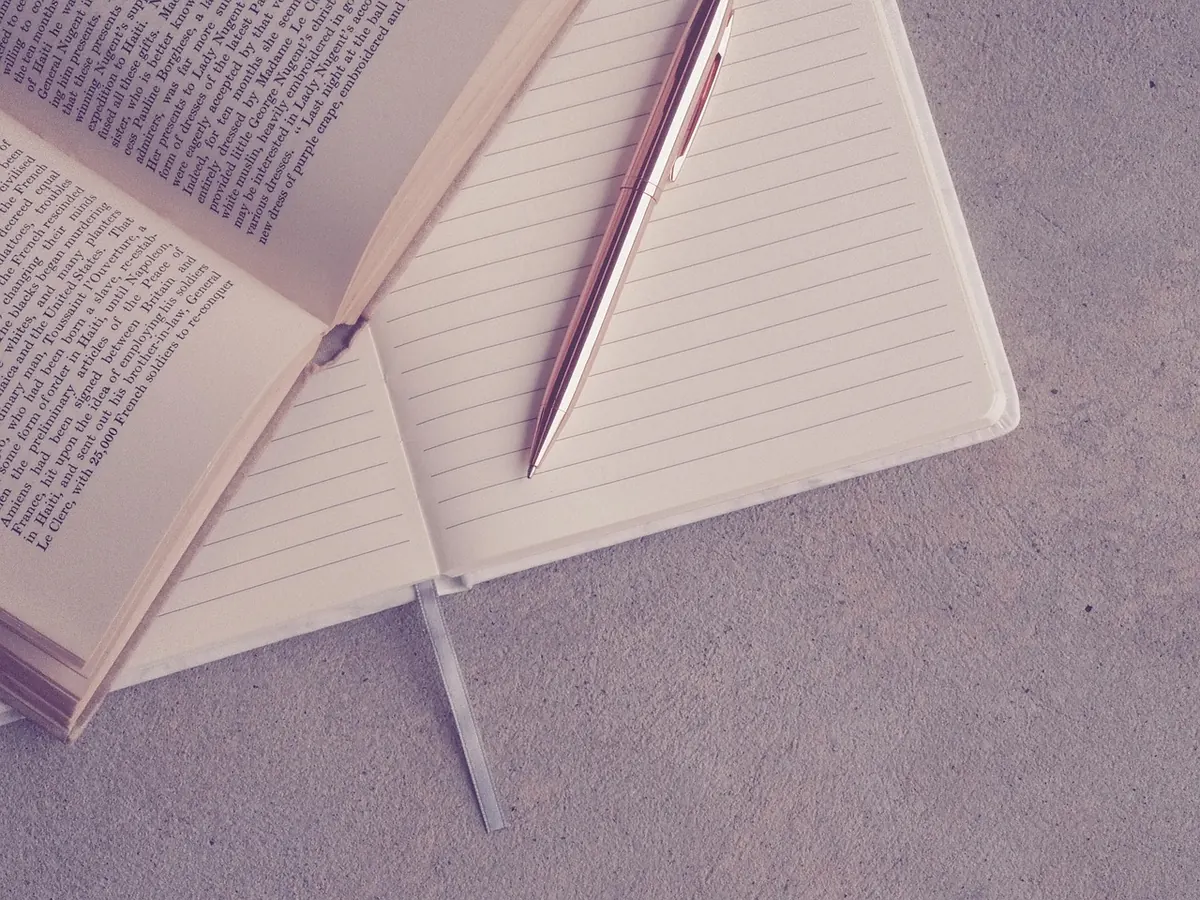
Three notebooks, same size, same paper weight, same price. The only real difference is what's printed on the page: lines, dots, or nothing at all. It is tempting to treat that as a detail you will stop noticing by the second week. You won't. The ruling decides how much you write, how straight your margins stay, whether you dare to sketch a diagram in the middle of an entry, and whether a page that went badly feels like wasted paper or just another page. What follows is a working comparison, not a verdict.
The Ruling Sets the Rules Before You Write a Word
Paper is a quiet collaborator. Ruled paper tells you where the sentence goes and how much of it fits. Dotted paper suggests a grid and then lets you ignore it. Blank paper hands you the whole job, including the job of inventing structure you never asked for.
Two physical details matter more than most people expect. The first is spacing. A 6mm line is not the same tool as an 8mm line: with small handwriting, wide ruling leaves entries looking thin and floaty, while with large handwriting, narrow ruling forces you to cramp your letters or skip lines. The second is consistency. Every page of a ruled notebook looks the same from across the room, which makes flipping back to find something far easier than in a blank book where each spread has its own shape.
Before you buy anything, write three sentences on an unlined sheet, then measure the height of a lowercase "o" with a ruler. Under 5mm, look for narrow ruling or a 5mm dot grid. Over 7mm, wide ruled or blank paper will fit your hand better.
Ruled Paper, the Reliable Default
Ruled is the layout most people learn on, and for long-form journaling it is hard to beat. The lines do the spatial thinking for you, so your attention stays on the sentence. That matters most at the end of a tiring day, or at the start of one when you are writing before you are properly awake.
It suits:
- Stream-of-consciousness entries and morning pages, where the goal is volume rather than beauty
- Dated daily logs you want to skim later
- Gratitude lists, worry lists, letters you never send
- Anyone whose handwriting drifts uphill after a paragraph
The limits show up when you want to do something other than write in a straight line. Sketches look apologetic. A mind map has to fight the ruling. Arrows and margin notes feel like small acts of vandalism against the page. And some writers find that a line, once started, demands to be filled, which quietly encourages padding.
Practical tip: if you like to sketch inside a ruled book, choose one with a wide margin printed down the side, or draw a vertical line 2cm from the gutter and treat that strip as your scrap zone.
Dotted Paper, Structure Without the Cage
Dot grid, usually 5mm, is the compromise layout and the one I would hand to someone who cannot decide. Up close the dots are visible; at reading distance they almost disappear, which means a dense page of writing still looks like writing rather than a spreadsheet.
What the dots give you is anchoring without obligation. You can rule a column, box off a week, build a habit tracker, sketch a rough chart of your sleep, or draw the floor plan of the flat you want to leave. Then you can turn the page and write three paragraphs of pure prose that ignore the grid entirely.
Two downsides are worth knowing. Dense entries can look slightly busy, since the dots sit behind every line of text. And because dots mark positions rather than baselines, handwriting can wander between them, especially when you are writing quickly. If that bothers you, treat the dots as vertical guides only — use them to keep your left margin and column widths consistent, and let the sentences sit where they fall.
Blank Paper, Freedom Plus a Chore
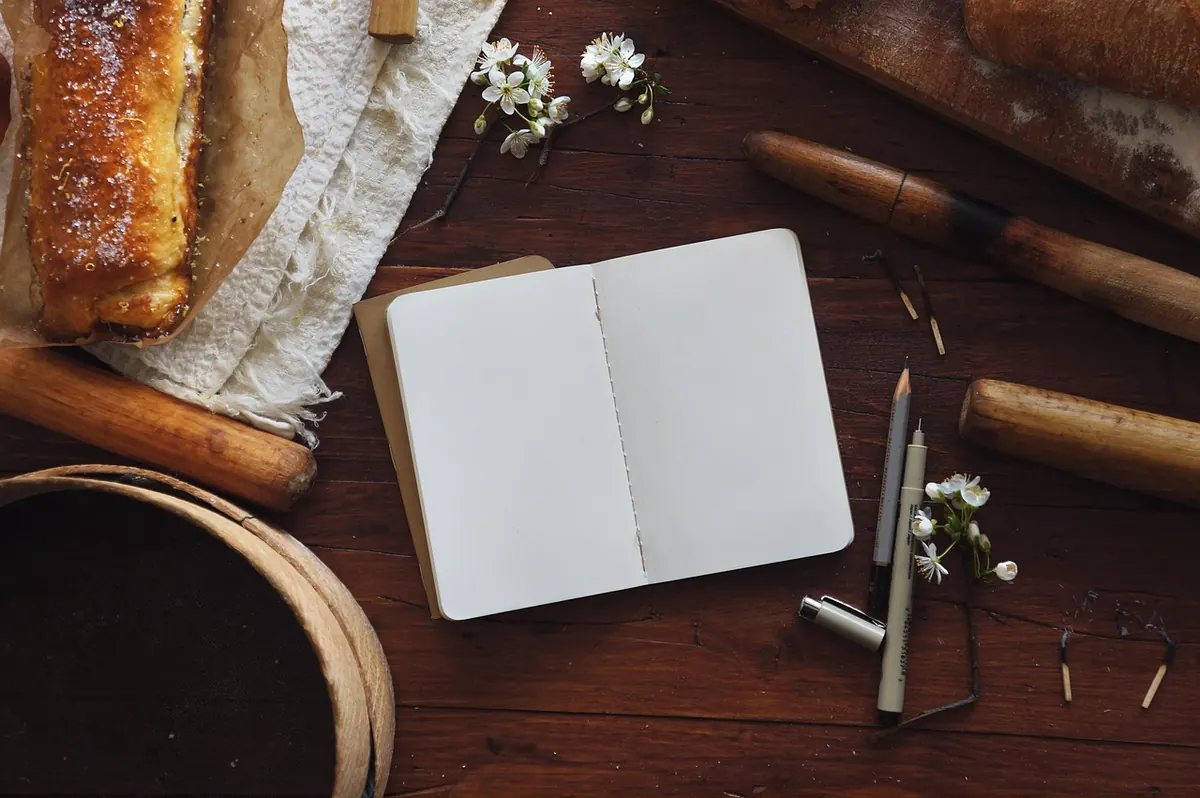
Blank pages take the brakes off. Handwriting often gets larger and looser, sketches stop looking like intruders, and a spread can become a mind map, a timeline, a collage, or four short entries in four different corners. If you journal to think rather than to record, blank is worth trying.
A blank page does not remove structure. It asks you to supply it, every single time.
That is the cost. Without guides, lines drift downhill, margins wander, and long entries become difficult to scan a month later. Blank paper also shows every wobble, which can be discouraging if you are self-conscious about your handwriting.
There are workarounds. Slip a ruled sheet under the page — most journal paper is thin enough for the lines to show through faintly, and you can remove it whenever you want to draw. Draw a pencil margin and erase it later. Rotate the notebook a quarter turn for wide spreads and diagrams. Many people keep blank paper for messy thinking and a ruled or dotted book for the record.
Matching the Layout to the Way You Actually Journal
Start from the habit, not the aesthetic. The list below is a rough sorting, not a rulebook.
- Long, continuous entries. Ruled, in a spacing that matches your handwriting.
- Daily logs and habit tracking. Dotted, because you can build a table one day and ignore the grid the next.
- Sketching, diagrams, collage. Blank, or dotted if you want faint guides.
- Mixed use — planning, lists and reflections in one book. Dotted is the safest single choice.
- Fountain pens and wet inks. Layout matters less than paper weight; test for show-through before committing to a thick notebook.
- Left-handed writers. Choose a top-bound or right-side spiral so your hand never rests on the binding, and favour a quick-drying ink.
If your journaling changes shape through the year — and it usually does — consider two thin notebooks rather than one thick one. A slim ruled book for words and a dotted or blank one for everything else is easier to keep up than a single book that only does half the job.
How to Settle It in One Afternoon
You do not need to research this for weeks. Take the notebooks you already own, or buy the cheapest version of each, and run a test.
- Write for ten minutes on each layout, on the same topic, at the same time of day.
- Notice your hand, not just the page: cramping, drifting, catching the spiral.
- Look at the finished pages from a metre away. Which one would you want to reread?
- Pick one and use it for a full notebook. Switching mid-book splits your record and hides the answer.
If you are still torn after that, choose dotted. It is forgiving enough for prose, structured enough for lists, and it will not stop you drawing when the mood takes you. Then let the question go. The best layout is the one you stop thinking about somewhere around page twenty, when the notebook has become a place rather than a decision.
Photo: JessBaileyDesign / Pixabay